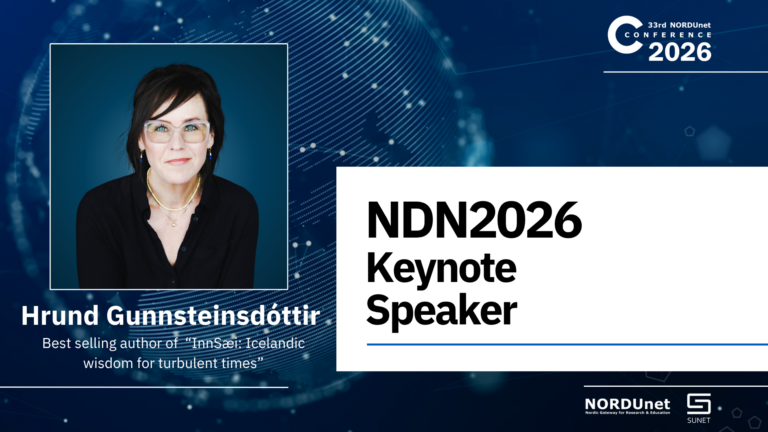

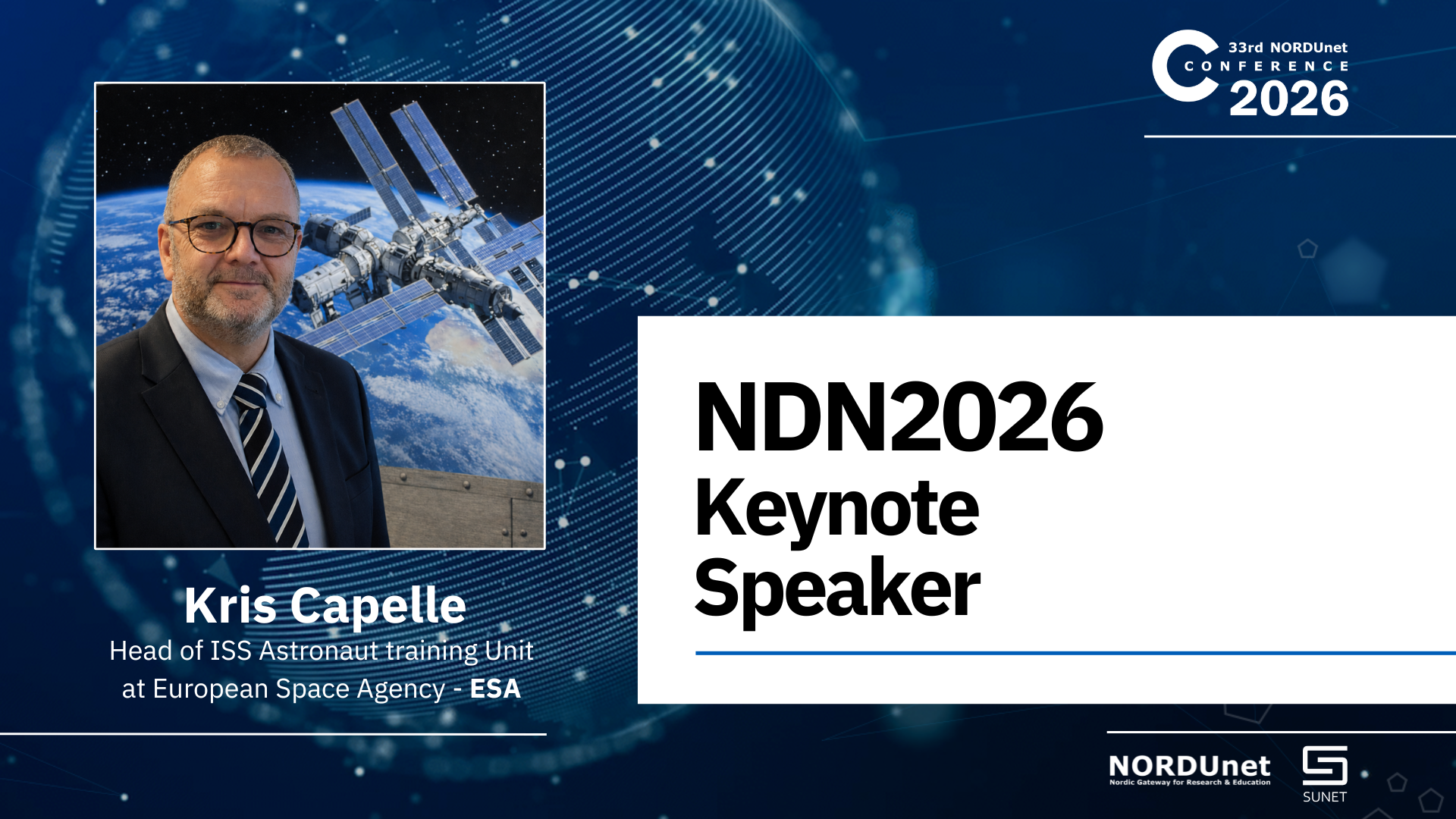
Kris Capelle, heading the training of European astronauts, offers a glimpse behind the scenes of one of the world’s most fascinating professions.
Astronauts are picked from thousands of applicants and undergo extensive interviews and tests before being accepted for their positions. Few other jobs are associated with similar levels of fascination.
Kris Capelle, head of training activities at the European Astronaut Centre in Köln, Germany, is ready to introduce NDN 2026 participants to the world of human spaceflight.
“The most important quality for an astronaut is the ability to assess and handle risk in any given situation. No matter how much we minimize risk, it can never be zero, when you are literally sitting on top of several tons of oxygen and rocket fuel. This requires astronauts to have a special mentality,” says Capelle, continuing:
“Today, we recruit from a variety of backgrounds – medical doctors, astrophysicists, engineers, pilots, and others. This variety makes us stronger as a team.”
The first ever rendezvous with a comet
Kris Capelle graduated in telecommunications engineering from the Royal Military Academy, Belgium, then took part in a peace-keeping mission in the former Yugoslavia and later worked as Station Commander at the NATO Satellite Communication station in Kester, before he joined the European Space Agency (ESA) in 1998.
The first ESA position was at the ground control center in Darmstadt, Germany. Over a decade, Kris Capelle was ground segment operations manager for the critical phases of 12 launches.
Perhaps the most memorable launch was that of the unmanned Rosetta mission in March 2004. Over the coming 10 years, the spacecraft would position itself to become the first in history to rendezvous with a comet, the 67P/Churyumov-Gerasimenko, in late 2014.
By 2007, Kris Capelle left the European Space Operations Centre (ESOC) to become mission director of ESA’s ATV (Automated Transfer Vehicle) program. These unmanned spacecrafts were a cornerstone of Europe’s contribution to the International Space Station (ISS). They would bring much needed supplies to the ISS, serve as engine for the ISS for 6 months, and later serve as garbage bins, freeing the astronauts from trash. It was also the first spacecraft performing a fully automated rendezvous and docking with the space station.
From unmanned to manned spaceflight
Having supplied 5 cargo vehicles for the space station, ESA ended the ATV program in 2016, and Kris Capelle took the step from unmanned to manned spaceflight – becoming head of training at the European Astronaut Center.
Just now is a highly interesting time for the astronaut center, as French ESA astronaut Sophie Adenot recently came onboard the ISS to initiate the longest European astronaut mission to date.
Further, Kris Capelle is strongly involved in the next European ISS mission, in which his Belgian countryman Raphaël Liégeois will become a crew member.
“Both Sophie and Raphaël are members of the most recent class of astronauts that initiated their training in 2023. This was the first new class in my time as director, so I am especially enthusiastic about their missions.”
Sophie Adenot is scheduled to spend 9 months at the space station, conducting up to 36 experiments from Europe.
How to connect in space
To connectivity professionals – such as the NDN conference participants – it might be of interest to know just how communications with the astronauts at ISS take place. In 2021, the European module at ISS, the Columbus laboratory, was equipped with a powerful Ka-band antenna. The system delivers data volumes of up to 50 Mbit/s for downlink and up to 2 Mbit/s for uplink.
The antenna transmits signals that are picked up by a telecommunications satellite in geostationary orbit 36,000 km above Earth.
“This system is a significant improvement for the astronauts. Previously, we had to schedule contacts for time when the station flew over certain ground stations, and contact could only be maintained for a few minutes. Now, we can connect at any time and for any duration,” says Kris Capelle, noting that he was not personally involved in the Ka-band antenna project.
“Still, as a telecommunications engineer, I could maybe say a bit about this subject if the NDN participants are interested. But my problem is that I only have 45 minutes and would want to touch on so many subjects. I guess that I am just equally enthusiastic about space flight after all these years!”
Register Here
Kris Capelle is Head of the Astronaut Basic and Mission Training Unit at the European Astronaut Centre in Köln, Germany.